





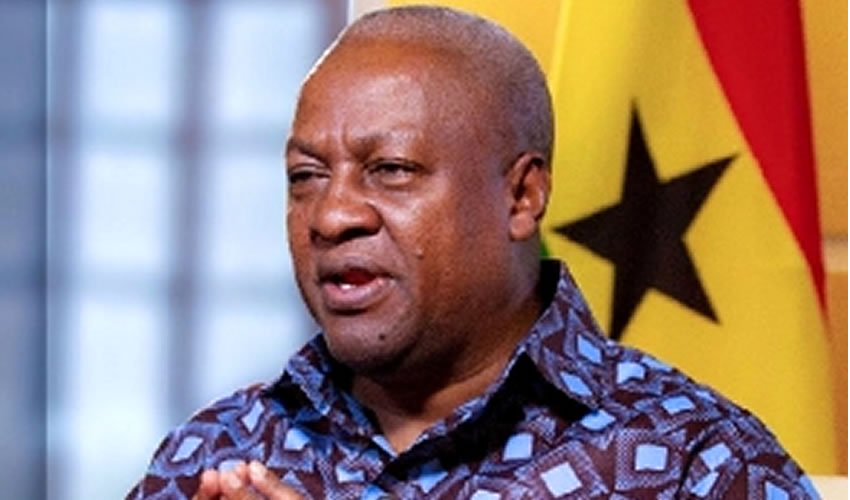
Ghanaian President John Dramani Mahama has urged West African nations to abandon the pretense of a unanimous launch and finally bring the long-promised ECO currency to life, calling for a phased rollout that allows economically ready countries to proceed without waiting for the entire 12-member bloc.
Speaking at the West African Integration and Investment Summit (WAIIS) in Freetown, Sierra Leone, Mahama expressed deep frustration with a monetary integration project that has spanned generations. “At one stage, two countries qualify, another stage, five countries, another stage, it reverts to three countries… all the time we are waiting for all the 15 ECOWAS countries to achieve convergence criteria. It is like waiting for Jesus Christ to come back,” he said, highlighting the absurdity of the endless cycle. His proposal, previously presented alongside Sierra Leonean President Julius Maada Bio at the last ECOWAS summit, envisions the ECO running side by side with national currencies initially, specifically to settle intra-regional trade and reduce the region’s reliance on the US dollar.
A History of Broken Promises
The dream of a single West African currency is not new; it has been a cornerstone of ECOWAS’s vision for decades. However, the path has been littered with missed deadlines. Originally envisioned as part of the broader regional integration agenda, the ECO has been officially postponed at least five times, with target dates of 2003, 2005, 2010, 2015, and 2020 all passing without a launch. The current target is now set for July 2027, a date that many analysts view with skepticism given the track record.
Why the ECO Has Stalled
The persistent delays boil down to a fundamental flaw in the original design: the attempt to create a single currency for 12 nations with vastly different economic trajectories and political realities. The primary obstacle has been the failure of member states to meet the macroeconomic convergence criteria, the strict benchmarks required for a stable monetary union. These primary criteria demand that a country maintain an inflation rate of no more than 5 per cent, a fiscal deficit of no more than 3 per cent of GDP, central bank financing of the deficit capped at 10 per cent of previous tax revenue, and foreign reserves sufficient to cover at least three months of imports.
These targets have proven elusive. Analysts note that weak economic governance, inconsistent policies, and fiscal instability across the region have made it nearly impossible for all members to qualify simultaneously. The problem is compounded by differing exchange rate regimes—some nations use the French-backed CFA franc, while others manage independent currencies like the Nigerian naira or Ghanaian cedi—making the merger of monetary systems extraordinarily complex.
Beyond economics, the project has been battered by political shocks. The COVID-19 pandemic devastated fiscal positions, while a wave of military coups in the Sahel further destabilized the region and led to the withdrawal of key states, shrinking the bloc’s scope. Sovereignty disputes over the CFA franc’s French backing have also created deep ideological divisions about what the ECO should ultimately represent.
Mahama’s intervention is a direct response to this paralysis. By advocating for a variable geometry approach, he argues that the perfect should not be the enemy of the good. The Bank of Ghana has already signaled its readiness, with Governor Johnson Pandit Asiama stating that Ghana meets the convergence criteria and is prepared to adopt the ECO under the proposed phased arrangement. With West Africa boasting a market of over 450 million people, the pressure is mounting to ensure the ECO becomes more than a recurring aspiration.
EcowasNewsOnline.com