





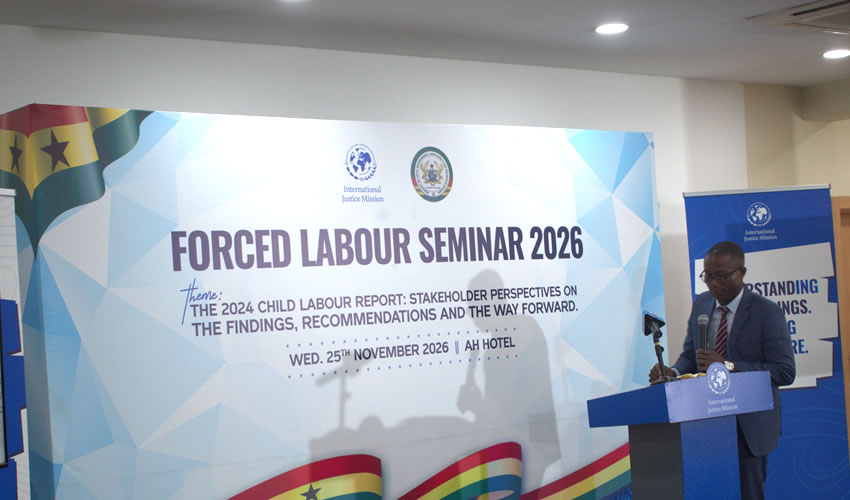
The government and its partners reached more than 210,000 people with anti-child labour awareness campaigns in 2024 and withdrew nearly 10,000 children from child labour, according to the latest Annual Child Labour Report. However, the report warns that efforts remain heavily concentrated in the cocoa sector, while support for vulnerable families has declined significantly.
The report, compiled by the Child Labour Unit of the Ministry of Labour, Jobs and Employment, indicates that 28 organisations submitted reports on child labour interventions in 2024.
According to the findings, 14,205 children were identified as being at risk of child labour, while another 14,014 were found to be engaged in child labour. Of those engaged, 1,522 were involved in the worst forms of child labour, representing 11 percent of all identified cases.
The report also shows that 9,849 children were withdrawn from child labour during the year, a significant improvement from 2023, when only 28 percent of identified children were withdrawn. In 2024, the withdrawal rate rose to more than 70 percent.
Beyond withdrawals, more than 10,000 children received various forms of support, including educational materials, counselling and vocational training. More than 9,700 parents and caregivers also benefited from interventions aimed at strengthening family resilience and reducing children’s vulnerability to labour exploitation.
The report credits awareness campaigns, community-level monitoring structures and educational support programmes with helping sustain progress in the fight against child labour. More than 4,800 sensitisation activities were conducted nationwide, reaching communities in all 16 regions.
However, despite these gains, the report raises concerns over a sharp decline in family-strengthening interventions. Support for income-generating activities, savings groups and cash transfers fell considerably compared with the previous year—a trend the report says could undermine efforts to address the economic drivers of child labour.
The Child Labour Unit also notes that anti-child labour interventions remain disproportionately focused on cocoa-growing communities, with only one of the eight priority sectors outlined in the Ghana Accelerated Action Plan Against Child Labour receiving significant attention.
The report further reveals that implementation of the national action plan remains slow. Of the 54 activities planned for 2024 under the Ghana Accelerated Action Plan Against Child Labour, only three were fully completed, while nearly one-third had not started by the end of the year.
Officials are therefore recommending stronger investment in vulnerable families, improved data collection, broader stakeholder participation and accelerated implementation of the national action plan to sustain the gains made and expand protection for children across all sectors.
EcowasNewsOnline.com