






Both Ghana and Kenya were colonized by the British and through the process of colonisation, both have adopted English language as their official language.
Ghana is in the west African sub -region and Kenya is located in East Africa.
Both countries are members of the African Union, the Commonwealth, Commonwealth Parliamentary Union and the United Nations and its agencies.
The two countries also belong to their sub- regional blocs. Ghana is an active member of the Economic Community of West African States with countries like Nigeria, Senegal, the Gambia, Sierra Leone, Cote d Ivoire, Cape Verde, Guinea, Guinea Bissau, Togo and Liberia. Kenya is also a member of the East African Community which has countries such as Tanzania, Uganda, Burundi, Democratic Republic of Congo, Rwanda, South Sudan and Somalia.
Ghana practices a hybrid system of democracy which allows the President to appoint majority of his Ministers from Parliament.
What it means is that it is a combination of the Presidential and the Parliamentary systems of the United States of America and the United Kingdom. This system is seen as a novel in our democratic culture across Africa.
Kenya practices pure Presidential system of governance, where Ministers of State are not Members of Parliament.
The dichotomy of the two parliaments are interesting to be observed or noted.
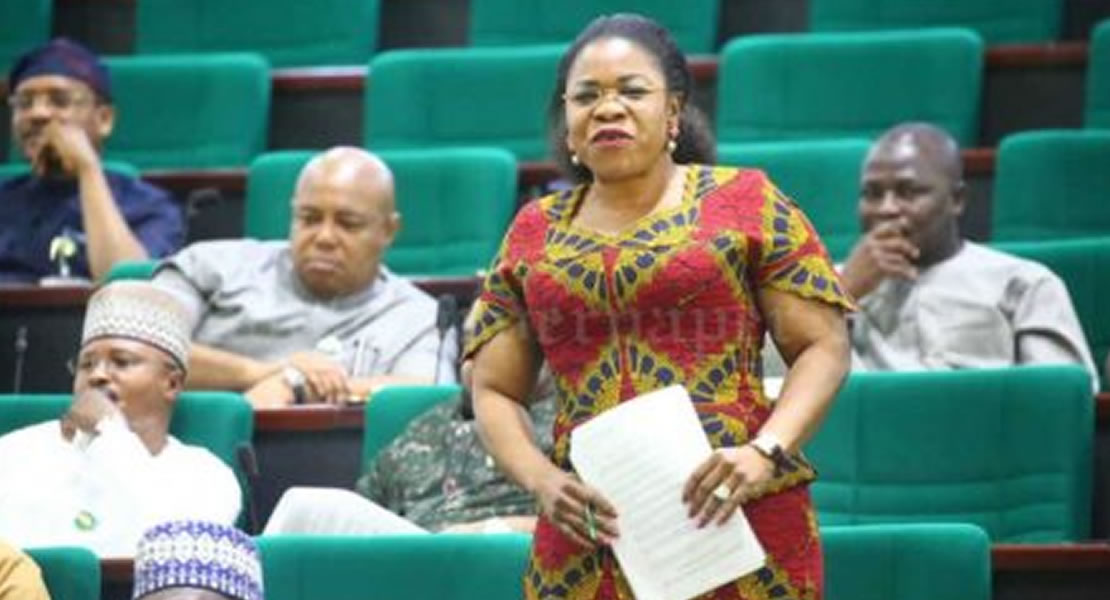
Ghana’s Parliament is in its ninth Parliamentary birth and it is a unicameral system, that is one Chamber House.
It has 276 elected members each representing a constituency.
The tenure of office an elected Member is four years.
The core functions of the Members of Parliament are representation, oversight, legislation, deliberations and statement making.
It is important to appreciate statements- making as an equal valid role of our legislators. Members are given the opportunity to make statements on all issues: national and constituency based to highlight issues on health, security, environment, roads, infrastructure and other human centered programmes.
The essence is to draw the attention of those in charge to help resolve, provide,salvage or act.
According to the Standing Orders of Ghana’s Parliament, all statements to be presented by members are expected to be approved by the Speaker before they can be delivered on the floor of the House.
Both the Constitution and the Standing Orders allow Ministers of State to participate actively in debates, but cannot vote.
The Speaker is elected by the members of the House.
The current Speaker is Rt Hon Alban Sumana Kingsford Bagbin.
He is in his second term as the Speaker of the House having been the Presiding Speaker in the eighth Parliament.
He has two Deputies elected by the Members of the House.
The two Deputy Speakers are not to belong to the same political parties. This is a Constitutional fiat.
But it must be noted that in the eighth Parliament,the second Deputy Speaker was an independent Member of the House who agreed to do business with the then majority.
The Deputy Speakers act or preside over the House in the absence of the Speaker.
The FDS acts in the absence of the Speaker and the SDS also acts in the absence of the FDS. That is the arrangement.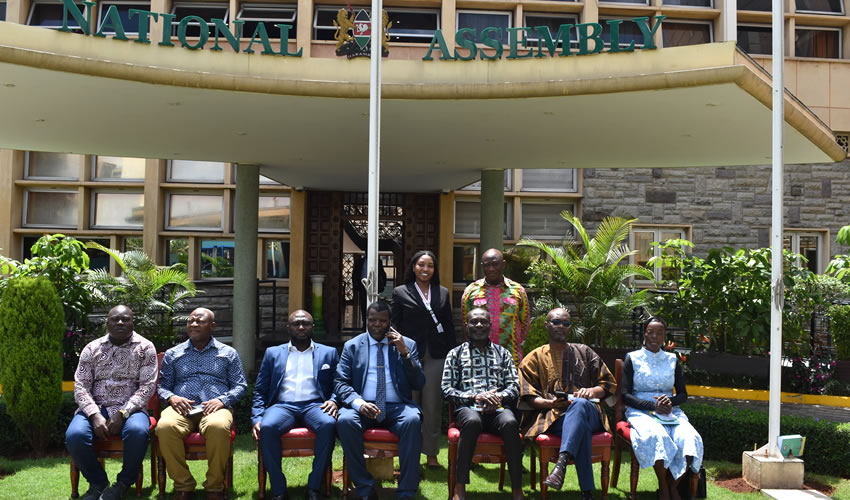
There are instances where any of them can preside when a Deputy Speaker has a business to perform on the floor.
For instance, the FDS is also the Chairman of the Appointment Committee of the House and where he has to present a Report of his Committee, the SDS can preside in the absence of the Speaker.
Also, where the three are absent, the Members will then choose a Member of the House to preside.
They normally choose a senior member to take the seat.
In law – making , the Ministers of State who pilot the Bills contribute immensely on the floor of the House and work hard to get their Bills passed.
They lobby very well to ensure that their Bills or businesses are attended to.
With Kenya Parliament, it is the thirteenth Parliament since the country reverted to a democratic dispensation.
The Parliament is Bicameral, that is two Chamber- House.
The Senate consists of 47 elected Senators. 16 senators are nominated or appointed, 2 members are also appointed to represent the youth population and another two senators are also nominated to represent persons with disabilities, that brings the total number of Senators to 67.
With the National Assembly, it consists of 349 members. The breakdown is as follows.
290 members are elected to represent the various Constituencies, 47 elected women representatives of the 47 counties and 12 appointed members representing special interest groups.
The current Speaker of the House, the National Assembly is Hon Moses Wetangula. He is an Ex- officio member of the House.
He was elected by the members of the National Assembly as it is done in Ghana.
Members also perform the functions of representation, oversight and legislation.
Other subsidiary functions members perform are deliberations and statements -making.
Ministers are not to participate in the activities of the House except when
they are invited to answer questions after which they depart from the House.
When it comes to the law- making, it is the leader of Government Business who champions the passage of the Bills.
Interestingly, Ministers whose Bills are before the House are not allowed to participate in the passage of their Bills, since the Bills are now seen as the ‘properties’ of the House, everything is shifted to the Leader of the Government Business to ensure their passage.
Also, statements are not approved by the Speaker, they are approved by the Chairpersons of the various Committees.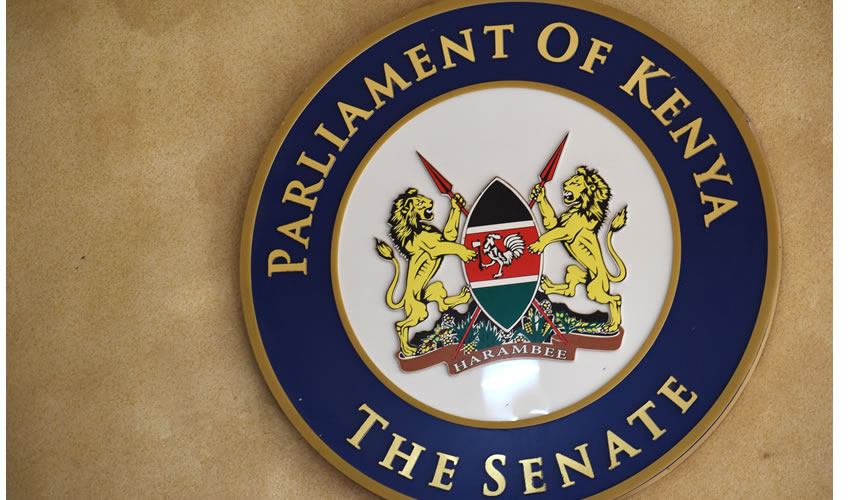
For instance, a statement on education matters, should be approved by the Chairperson of the Departmental Committee on Education, likewise a statement on security issue should be approved by the Chairperson on the Departmental Committee on Administration and Internal Security.
The Speaker and the leadership do not have any role to play in the determination and the approval of the statements to be made by the members.
The Speaker of the National Assembly has a Deputy elected by the members of the House.
But they have what they termed as Panel Members, three each from the Majority and the Minority who act in the absence of the Speaker and his Deputy.
One of them presides at a particular time of the sitting of the House.
Since they practice the bicameral system, anytime there is a disagreement between the Senate and the National Assembly, the two legislative institutions will appoint a mediation committee to help resolve the impasse.
The National Assembly will elect six members and the Senate also does the same.
Therefore, six members apiece.
The members are expected to apply their expertise on the issue of disagreement to resolve the impasse.
It is also important to note that members of the National Assembly are given financial allocations ( budget) to undertake developmental projects in their various constituencies.
They are also agents of development unlike what pertains to Ghana.
The State also put up offices for the members in their various Constituencies to support their tasks.
Members are encouraged to visibly be in their Constituencies for the constituents to have access to them especially during recess.
The dichotomy of the two countries in their democratic cultures should be lessons to be learnt by both countries to help promote and defend their Parliamentary Democracies.
Ahmed
The Servant