





From Declarations to Delivery: Kigali Tests Africa’s Food Finance Promises
Kigali, Rwanda — For two decades, Africa’s food systems agenda has been rich in declarations. From Maputo in 2003 to Malabo in 2014 and now the Kampala CAADP Declaration, governments have repeatedly pledged to raise investment, transform agriculture and build more resilient food economies.
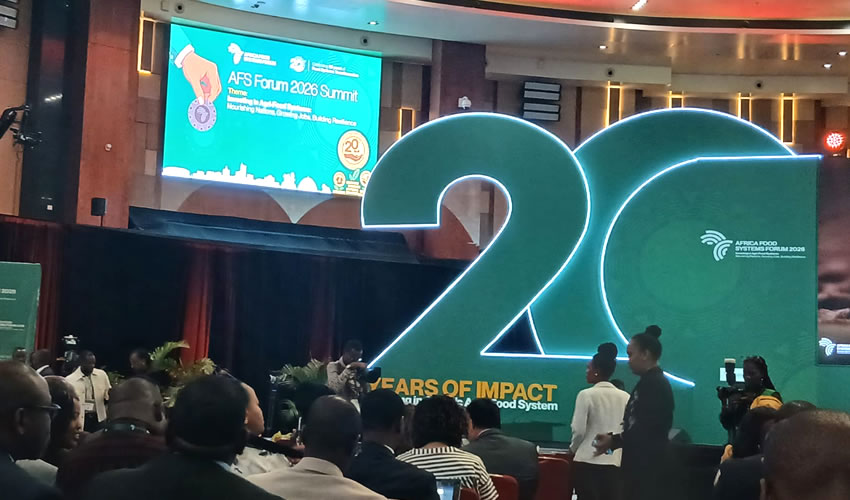
At the Africa Food Systems Forum 2026 in Kigali, which marked its 20th edition under the theme “Investing in Africa’s Agri-Food Systems: Nourishing Nations, Growing Jobs, Building Resilience,” MPs from across the continent returned to a more urgent question: can these commitments finally be financed, tracked and delivered?
At a parliamentary roundtable convened by the African Food Systems Parliamentary Network on 1 September, lawmakers examined how to mobilise domestic finance for agri-food systems and make public spending more accountable.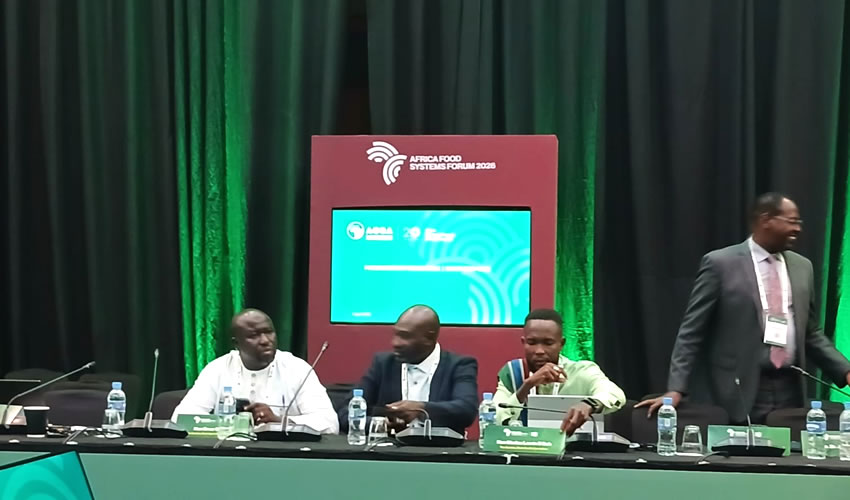
The discussion came as Africa faces a familiar contradiction: the continent has the land, labour, markets and entrepreneurial energy to feed itself, yet still relies heavily on imported food and external development finance.
During the Forum’s opening, IFAD Vice-President Gérardine Mukeshimana announced a US$220 million package for Kenya, Tanzania, Rwanda and Uganda, alongside US$10 million for small agribusinesses and US$21 million for farmer organisations in Nigeria.
For West Africa, the Nigerian component was especially significant. It placed the financing debate inside a region where food security, youth employment, regional trade and agricultural value chains are increasingly inseparable.
The roundtable’s message was blunt: Africa’s next food systems decade must be measured not in communiqués, but in appropriations, disbursements, functioning markets and jobs.
Ghana’s Godfred Seidu Jasaw, who chaired the session, said lawmakers have the legislative power to strengthen food systems through budgetary allocations. “The test for Parliament is to turn continental targets into national budgets, investable policies and measurable results,” he said.
Parliamentarians framed their role around three levers: appropriation, legislation and oversight. In practice, that means shaping national budgets before they are finalised, passing laws that make agriculture more investable, and tracking whether approved funds are released, spent properly, and linked to measurable outcomes.
For ECOWAS countries, this is not an abstract governance question. It goes to the heart of how West Africa can reduce food import dependence, unlock domestic capital, create jobs for young people and strengthen regional food trade under AfCFTA.
Modou Lamin B. Bah of The Gambia was direct about the need to strengthen domestic financing for food systems. “We must follow the money through release, procurement, implementation, delivery and results,” he said.
Pension funds, domestic banks, credit guarantees, agricultural insurance, digital procurement systems and better risk data were discussed as part of the financing architecture needed to move agriculture from a high-risk sector to a credible investment destination.
The entrepreneurs at the Forum showed why that shift is critical.
In Ghana, Martha Akolbilo of Nutribrown still processes soybeans, cinnamon, and other cereals by hand with only three employees. Her business does not need another declaration: it needs mechanisation, working capital and a route to scale.
“I mill 50kg every three days manually. I wash, dry, and grind the soybean, then mix them with corn, salt, coconut, and cinnamon. With automation, I can process more and ensure the business remains sustainable,” she told investors.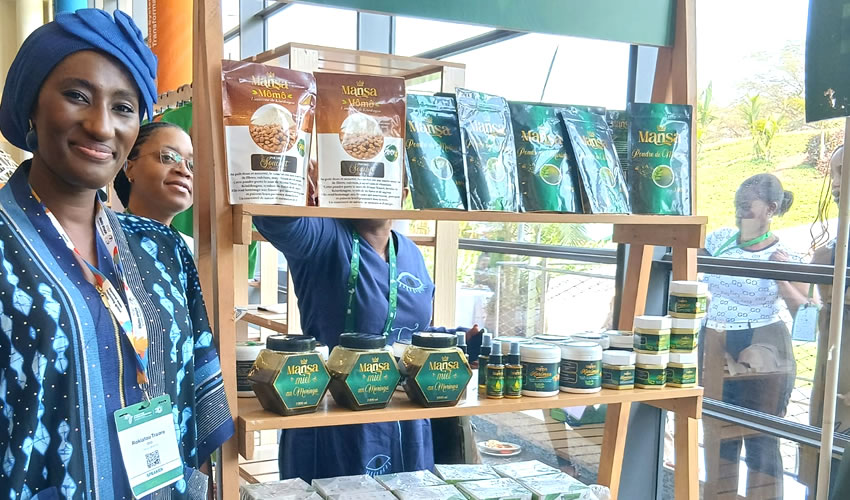
Rokiatou Traore of Herou Alliance in Mali is building value around moringa, but needs stronger access to export markets, certification pathways and regional buyers.
In Busia, Kenya, Bernard Juma of Greenwells Agriculture works with 11 employees and a network of 21 agents linking farmers to markets. His need is basic but decisive: reliable connectivity that allows farmers, agents and buyers to trade more efficiently.
Their challenges reflect a wider continental pattern. Across West Africa and beyond, small agribusinesses are not short of ideas. They are short of affordable finance, processing equipment, reliable infrastructure, market access and policy systems that reduce risk rather than multiply it.
At the Forum’s Youth Table, Cheick Diarra, technical advisor on entrepreneurship and agribusiness at the International Institute of Tropical Agriculture, captured the deal-room reality: funders do not finance ideas alone; they finance products that can scale.
That standard poses a challenge not only to young entrepreneurs but also to governments and parliaments. If public budgets do not support roads, power, irrigation, storage, certification, data systems and cross-border trade, many promising enterprises will remain too small, too informal or too risky for investors.
The Kigali resolution called for agriculture and food systems to be treated as national economic priorities, not secondary sectoral concerns. It urged governments and parliaments to mobilise domestic capital, open investment pathways for pension funds and financial institutions, develop risk-sharing mechanisms and strengthen oversight so approved resources are not delayed, diverted or underused.
The regional dimension was equally important. East African Legislative Assembly member Gideon Thoar called for harmonised rules on seeds, plant varieties, fertilisers, pesticides and phytosanitary standards, alongside stronger food corridors. For West Africa, the same agenda speaks directly to ECOWAS priorities on cross-border trade, food security and market integration.
For farmers, processors and traders, these reforms determine whether goods can move efficiently across borders, meet common standards and reach larger regional markets.
If the new financing commitments reach farmer organisations, small agribusinesses and youth-led enterprises, they could help turn local processors into employers and national food policies into functioning value chains. If they stall in procurement systems, budget delays or weak oversight, they will become another entry in Africa’s long archive of missed agricultural promises.
Former Tanzanian Prime Minister Mizengo Pinda captured the point in the roundtable’s closing: “If there are weak areas, let’s hit them and strengthen them.”
For parliaments in Africa, that means moving beyond promises to the harder work of financing, oversight and delivery.
By Nelly Nyangorora/EcowasNewsOnline.com